
The world has undergone significant changes in the last few years. Startups face both challenges and opportunities. AI and new tech continue to disrupt several industries, and a new buzzword amongst professionals is the need for increasing LQ (Learning Quotient). How does one keep pace with so much information, and how does one prepare oneself for these changes?
We have been tracking the Executive Education space closely. Especially in the Management Education space. How can management professionals make themselves relevant? Constantly increasing LQ requires a serious investment of savings in upskilling and reskilling. The top IIMs have become very active in Executive Education in recent years because of decreasing funding support from the government and the pressure to generate revenues. However, the programs are out of reach for many professionals. Spending lakhs on short-term or long-term courses drains away most of your savings.
And yes, there is this craze about brand image! Many professionals justify spending their hard-earned savings with the belief that doing a course from an IIM will increase their chances of professional growth. The reality is that no one really cares. Also, a short burst of learning spread across 3-5 consecutive days often gets forgotten in quick time. Having programs spaced out can help in reflecting and applying the learnings to one’s own circumstances. It is important to have a mix of theory and practice that provides space and time to digest important takeaways. And yes, the faculty who take sessions really MATTER. Practitioners who can combine theory and practice are the ideal teachers. Imagine someone teaching entrepreneurship without having done anything on his or her own, OR someone teaching finance without having to make real-time decisions that can impact an organization’s finances OR someone teaching strategy without having to drive key strategies that can impact organization’s future – this is the dilemma faced with pure play academicians who take Exec Ed sessions. In the IIMs, this deficiency is compensated for by inviting practitioners, but there are limitations in engaging practitioners.
Executive Education in the management space is already seeing a shift. People want learning that lends itself to measurable impact. Do you see a shift in the consumption of learning by working professionals?
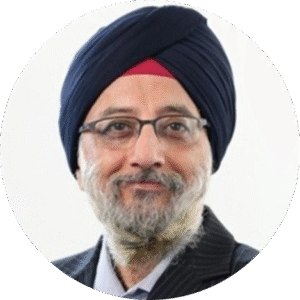 Rajbir Singh, PhD
Rajbir Singh is a founder and Consulting Partner at Value Centria, a boutique business consulting firm that leverages customer centricity and digital to drive growth and innovation. Additionally, he is the co-founder and CEO of the i4 Mentors Foundation, a startup accelerator. As a not-for-profit, i4 Mentors Foundation is working for “Build for India”, and Healthcare is one of their focus sectors.
Before this, Rajbir led Global Business and IT Consulting businesses at IBM, Oracle, HCL Technologies and Tata Unisys for 25+ years. He has led large, multi-cultural teams spread across the globe and has consulted with Fortune 500 clients across industries, including BFSI, Media, Telecom, Utilities, CPG and Manufacturing. His areas of expertise include Customer Strategy, Innovation Strategy, Business Strategy and Change Management. He has received recognition from Forrester, Pega, SAP and HCL Tech for developing innovative products.
Rajbir has been a visiting faculty at IIIT Delhi, IIT Delhi, NSUT and BIMTech. He is also on the board of a few startup incubators.
Rajbir is an Electronics Engineer from IIT Delhi, an MBA from IIM Bangalore and a PhD from IIT Delhi.
Websites: https://www.valuecentria.in/; https://www.i4mentors.com/
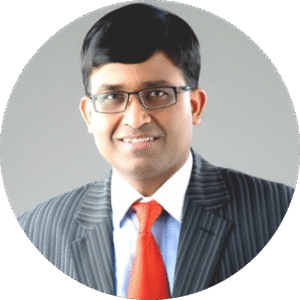 Sudarsan Chakravarthy
Founder, Chief Mentor & Success Coach – myDharma Global
A Spiritual leader, leadership coach, motivational speaker, accomplished global business leader, and an author with keen interests in ancient wisdom, spirituality, science, philosophy, and the arts.
An MBA from the Indian Institute of Management, Bangalore (IIM-B, Class of 93), India’s premier B-School, with a proven track record in building business, driving revenue & profitability growth and maximizing stakeholder delight.
Versatile and highly accomplished Management Professional with 25+ years of experience in the IT industry spanning across India, ME, Europe and North America.
Has rich experience across a wide range of areas – Digital Transformation, Line of Business Management, Business Operations, Sales, Marketing, IT Strategy, Operations, Finance, Product Management, and Service Delivery Management.
Worked with GBM (IBM GMSR) in Dubai for 20+years and championed several key strategies, including Business transformation, SAP implementation, Market Coverage, Growth Initiatives, Merger, Organizational restructuring, Low-cost services delivery, Market Research, IT Strategy, Business Partner / Channel Management, Operational Excellence, Sales Management, CRM, etc.
A motivational speaker with rich experience in running inspiring empowerment workshops; Has been inspiring and enthralling audiences of all age groups – individuals, groups, youth, families, corporate leaders – across several parts of the world with his captivating lectures; Meticulously gleans profound insights from the treasury of ancient wisdom and presents them in a way that illuminates the contemporary mind and resonates with today’s needs, interests, and challenges.
His life’s mission is to instill nobility and greatness across various strata of society.
Skillfully harmonizes the seemingly conflicting material and spiritual worlds and empowers individuals with a revitalising transformation and helps them to strengthen faith in their limitless potential; Is dedicated to unlocking the God given talents and highest abilities in people and empowering them to celebrate life through their unique contributions to the making of a new and beautiful world.

Subha Parthasarathy has been working with children, parents, and adults since 2006 and is the founder of Magichive. She is a Counselling Psychologist with over 20,000 counselling and training hours spent on 1-on-1 sessions with adults/children and group training sessions. Subha is an experienced trainer and facilitator who delivers workshops and programs that focus on enriching relationships with self and others. Her workshops “Chetana” (parenting workshop since 2009) and “Compassionate Communication based on NVC (since 2016)” are centred around increasing self-awareness and equipping participants with tools and insights that can help in leading an enriching life.
Person Centric Therapy, Mindfulness, and Nonviolent Communication form the cornerstones of her work. She is a Vipassana meditator and has certifications on various methods of interventions based on NLP, CBT, TA, NVC, Gestalt, Movement therapy, Reiki, Deep Listening, etc. She has delivered sessions in IIM Bangalore, IIM Kashipur, Infosys, Infosys BPO, Cap Gemini, Northern Trust, HSBC, etc.
Case Study: Case study on Magichive through Ivey Publishing, Ivey Business School, Canada (Click here for details) published in Oct 2024
Podcasts: Subha has hosted more than 20 free podcasts centred around mindfulness hosted on Spotify ( Click here for details)
Book: A book of 19 poems titled “Verses for Better – Parenting Lessons from Parenting Failures“, a collaborative effort between Magichive and Wunderman Thompson, was published in 2018. The book was nominated for two categories in the prestigious National Level Kyoorious Creative Awards 2019.