
Dates
Start Date: Saturday, 12 Sep 2026
Register By: 25 Aug 2026
Early Bird Deadline: 15 Aug 2026
Program Fee
Regular: Rs. 33,000 + GST
Early Bird Fee: Rs. 26,400 + GST
Duration
Live-Online, 12 Weeks
2 sessions /week
Sat/Sun: 7 pm to 8:15 pm IST
Click below to “Enroll and Pay” for the program – Enroll and Pay
Artificial intelligence (AI) is an interdisciplinary field of study that tries to mimic or recreate human intelligence in machines. Previously, the term “artificial intelligence” was used to describe machines that mimic and display “human” cognitive skills that are associated with the human mind, such as “cognition”, “thinking”, “learning” and “problem-solving”. However, for lack of flexibility, this view has been modified by major AI researchers. Thus, AI is now described in terms of rationality and acting rationally. This flexibility does not limit how intelligence can be articulated. One such definition by Stuart Russell and Peter Norvig, defines AI as the field that studies intelligent agents, where an “intelligent agent” refers to any system that perceives its environment and takes actions that maximise its chance of achieving its goals.
AI applications, having emerged out of the laboratory, have started diffusing not just across businesses but also in normal day-to-day life. These include advanced web search engines (e.g., Google), recommendation systems (YouTube, Amazon and Netflix), understanding human speech (such as Siri and Alexa), self-driving cars (e.g., Tesla), automated decision-making and competing at the highest level in strategic game systems (such as chess and Go). Business surveys regularly rank AI as one of the most interesting and fastest-growing fields, and it is already generating yearly revenues of over a trillion dollars. One widely respected AI expert Kai-Fu Lee predicts that AI’s impact will be “more than anything in the history of mankind.”
Considering the transformative impact that AI is poised to have across all sectors, it is increasingly essential for managers to understand AI from a business perspective. Such knowledge enables them not only to apply AI solutions within their functional domains but also to identify new opportunities for solving business challenges using AI-driven tools and techniques.
The course “Artificial Intelligence for Business” has been thoughtfully designed with a balanced blend of concepts and hands-on practice. Participants will gain a solid understanding of contemporary AI techniques and the confidence to apply these tools effectively in real-world business contexts.
AI adoption has increased dramatically in the last few years as shown in the graph below –
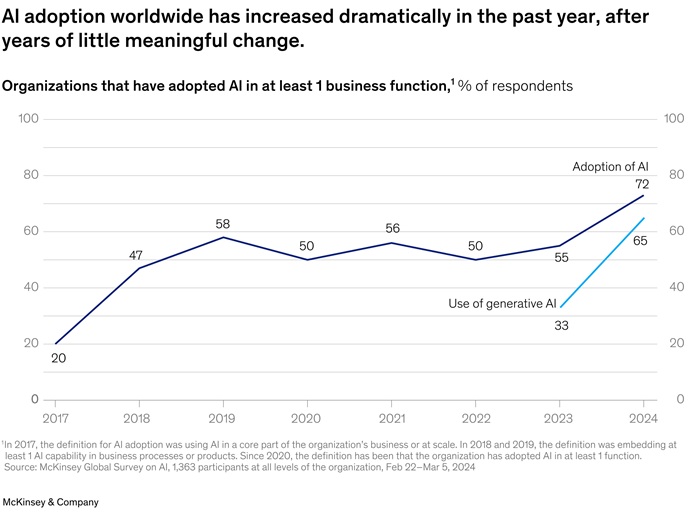
Here are industry statistics (global reports from McKinsey, IBM, PwC, and Deloitte) that make it imperative or business managers to upskill themselves on various aspects of AI:
Adoption & Demand
Skills & Capability Gap
Pedagogy
• Mid-level managers with 3–9 years of professional experience
• Professionals who currently have limited exposure to Artificial Intelligence
• Managers who are likely to interact with or oversee AI-driven applications in the near future
• Vertical-agnostic participants from any industry or functional background who wish to build AI literacy for business decision-making
Total Sessions: 24; Theory Sessions: 18; Hands-On Sessions: 6; Session Duration: 75 minutes each)
Note: The instructor will prescribe multiple readings and case studies during the duration of the course.
By the end of the course, every committed participant will have developed:
Clear conceptual understanding of the specific AI techniques covered in the program.
Intuitive grasp of the underlying thinking and logic that power modern AI approaches.
Hands-on proficiency in applying AI techniques to explore datasets, build models, and interpret results.
Practical business acumen to identify opportunities and apply the right AI methods to real-world business problems.

Dr. Rajesh Natarajan V., Associate Professor – Data Science & Information Systems at IFMR GSB, Krea University, is a seasoned Data Science and Business Analytics professional with 20+ years of experience across Data Science, Data Mining, AI, and Machine Learning.
He brings rich and diverse industry expertise, having worked in roles spanning analytics and data science project delivery, product and platform development, data science consulting and research, establishing Business Analytics Centres of Excellence, and driving pre-sales and business development initiatives.
Dr. Natarajan has designed and deployed analytical solutions for global clients across a wide spectrum of industries, including Banking and Financial Services, Insurance, Retail, Healthcare, Railroads, Hospitality, and Manufacturing. He has held key positions in leading IT and technology organizations such as Cognizant Technology Solutions, Hexaware, Wipro, GE Transportation, and Tech Mahindra.
In his prior role with the Tamil Nadu e-Governance Agency, IT Department, Government of Tamil Nadu, he contributed to the design and implementation of advanced analytical solutions and data-driven policies, strengthening the state’s digital and governance capabilities.
Dr. Rajesh Natarajan combines strong academic credentials with deep industry experience, offering participants a unique blend of conceptual rigor and practical, real-world insight. In academia, Rajesh worked as an Assistant Professor with the IT & Systems Group of the Indian Institute of Management, Lucknow (IIML) and as a Visiting Associate Professor, Industrial Engineering Group, Mechanical Engineering Area of Universidad Carlos III de Madrid (UC3M), in Madrid, Spain. Rajesh has been an active researcher and has contributed 20+ articles to leading international technical conferences (IEEE ICDM, IEEE IRI, etc.) and refereed journals.
Rajesh holds a Bachelor’s degree in Electronics Engineering (B.E. (Honours)) from the University of Bombay (Mumbai) and has completed the Fellow Program in Management (PhD in Management) from the Indian Institute of Management Bangalore (IIMB).
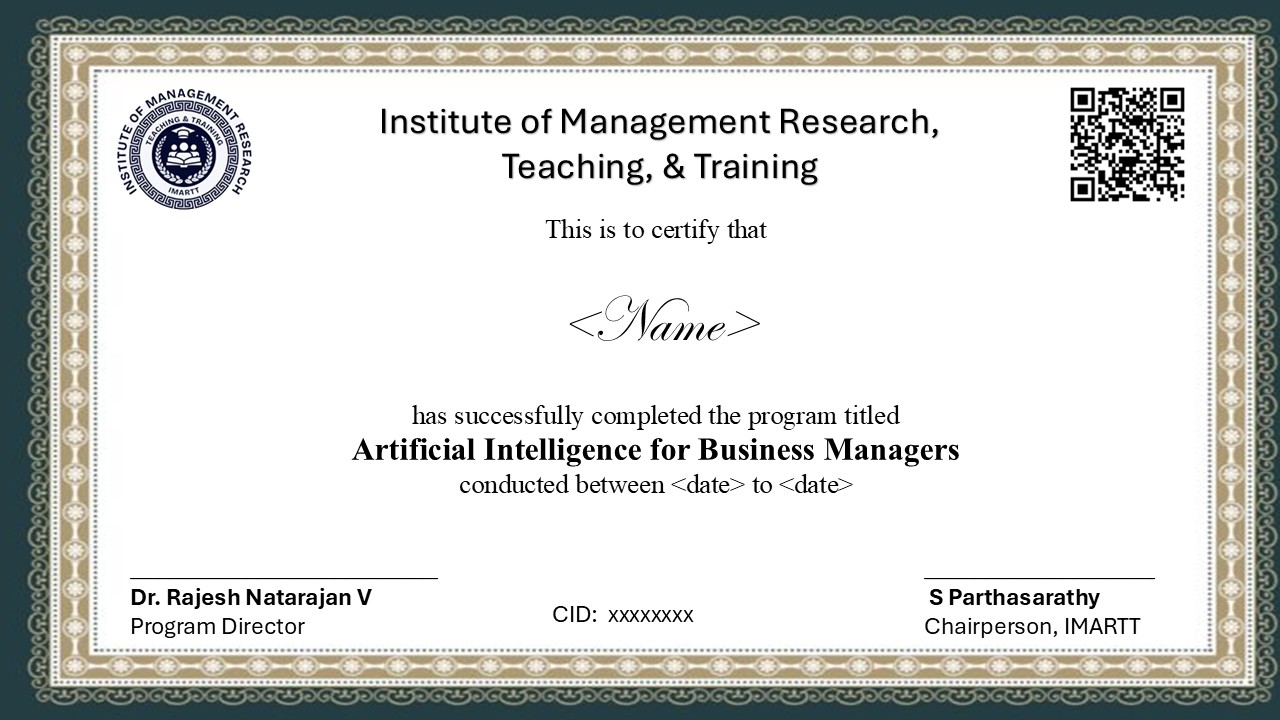
 The sample certificate image is for reference only and may change at the discretion of LabinMotion. The bona fides of the certificate can be verified by clicking on the QR code and entering the unique certificate number on the web page.
Schedule: Two sessions of 75 minutes each every week on Sat and Sun between 7 pm and 8:15 pm.
The program starts on Sat, 12 Sep 2026 and would run for 12 weeks. The program has a total of 24 sessions.
Delivery Mode: Live-Online through Zoom
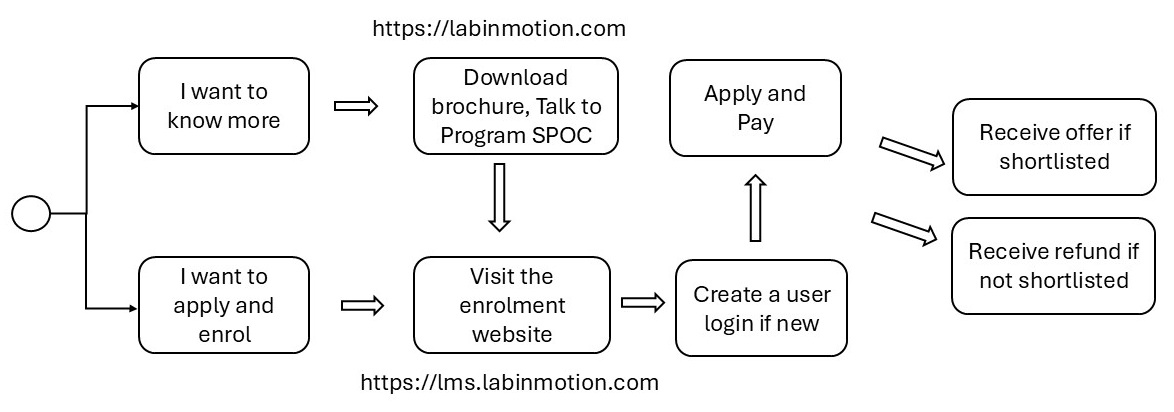
To enroll and apply for the program, click on the button below –
Enroll and PayThe payment and enrollment happen through our enrollment and learning management website – https://lms.labinmotion.com . We offer easy installment plans for all our programs. This can help plan your cash flows. We offer an additional 5% discount on group registrations for 3 or more people from a single organisation. Please email support@labinmotion.com for group registrations, and we will guide you through the enrollment process.
Parthasarathy S
Ph. +91 9110614400
Email: partha@labinmotion.com
AI creates impact when supported by strategic leadership. The program on Strategic Management, Leadership and Emotional Intelligence helps you assess AI opportunities and influence adoption.
To ensure AI initiatives drive real value, the program on Customer Centricity: Driving Growth Through Customer Value aligns insights with customer needs and growth.
Successful AI adoption also depends on teams embracing change. The program on Creating and Leading High-Performing Teams supports collaboration and capability building in AI-driven environments.
 Rajbir Singh, PhD
Rajbir Singh is a founder and Consulting Partner at Value Centria, a boutique business consulting firm that leverages customer centricity and digital to drive growth and innovation. Additionally, he is the co-founder and CEO of the i4 Mentors Foundation, a startup accelerator. As a not-for-profit, i4 Mentors Foundation is working for “Build for India”, and Healthcare is one of their focus sectors.
Before this, Rajbir led Global Business and IT Consulting businesses at IBM, Oracle, HCL Technologies and Tata Unisys for 25+ years. He has led large, multi-cultural teams spread across the globe and has consulted with Fortune 500 clients across industries, including BFSI, Media, Telecom, Utilities, CPG and Manufacturing. His areas of expertise include Customer Strategy, Innovation Strategy, Business Strategy and Change Management. He has received recognition from Forrester, Pega, SAP and HCL Tech for developing innovative products.
Rajbir has been a visiting faculty at IIIT Delhi, IIT Delhi, NSUT and BIMTech. He is also on the board of a few startup incubators.
Rajbir is an Electronics Engineer from IIT Delhi, an MBA from IIM Bangalore and a PhD from IIT Delhi.
Websites: https://www.valuecentria.in/; https://www.i4mentors.com/
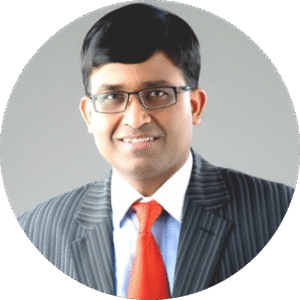 Sudarsan Chakravarthy
Founder, Chief Mentor & Success Coach – myDharma Global
A Spiritual leader, leadership coach, motivational speaker, accomplished global business leader, and an author with keen interests in ancient wisdom, spirituality, science, philosophy, and the arts.
An MBA from the Indian Institute of Management, Bangalore (IIM-B, Class of 93), India’s premier B-School, with a proven track record in building business, driving revenue & profitability growth and maximizing stakeholder delight.
Versatile and highly accomplished Management Professional with 25+ years of experience in the IT industry spanning across India, ME, Europe and North America.
Has rich experience across a wide range of areas – Digital Transformation, Line of Business Management, Business Operations, Sales, Marketing, IT Strategy, Operations, Finance, Product Management, and Service Delivery Management.
Worked with GBM (IBM GMSR) in Dubai for 20+years and championed several key strategies, including Business transformation, SAP implementation, Market Coverage, Growth Initiatives, Merger, Organizational restructuring, Low-cost services delivery, Market Research, IT Strategy, Business Partner / Channel Management, Operational Excellence, Sales Management, CRM, etc.
A motivational speaker with rich experience in running inspiring empowerment workshops; Has been inspiring and enthralling audiences of all age groups – individuals, groups, youth, families, corporate leaders – across several parts of the world with his captivating lectures; Meticulously gleans profound insights from the treasury of ancient wisdom and presents them in a way that illuminates the contemporary mind and resonates with today’s needs, interests, and challenges.
His life’s mission is to instill nobility and greatness across various strata of society.
Skillfully harmonizes the seemingly conflicting material and spiritual worlds and empowers individuals with a revitalising transformation and helps them to strengthen faith in their limitless potential; Is dedicated to unlocking the God given talents and highest abilities in people and empowering them to celebrate life through their unique contributions to the making of a new and beautiful world.

Subha Parthasarathy has been working with children, parents, and adults since 2006 and is the founder of Magichive. She is a Counselling Psychologist with over 20,000 counselling and training hours spent on 1-on-1 sessions with adults/children and group training sessions. Subha is an experienced trainer and facilitator who delivers workshops and programs that focus on enriching relationships with self and others. Her workshops “Chetana” (parenting workshop since 2009) and “Compassionate Communication based on NVC (since 2016)” are centred around increasing self-awareness and equipping participants with tools and insights that can help in leading an enriching life.
Person Centric Therapy, Mindfulness, and Nonviolent Communication form the cornerstones of her work. She is a Vipassana meditator and has certifications on various methods of interventions based on NLP, CBT, TA, NVC, Gestalt, Movement therapy, Reiki, Deep Listening, etc. She has delivered sessions in IIM Bangalore, IIM Kashipur, Infosys, Infosys BPO, Cap Gemini, Northern Trust, HSBC, etc.
Case Study: Case study on Magichive through Ivey Publishing, Ivey Business School, Canada (Click here for details) published in Oct 2024
Podcasts: Subha has hosted more than 20 free podcasts centred around mindfulness hosted on Spotify ( Click here for details)
Book: A book of 19 poems titled “Verses for Better – Parenting Lessons from Parenting Failures“, a collaborative effort between Magichive and Wunderman Thompson, was published in 2018. The book was nominated for two categories in the prestigious National Level Kyoorious Creative Awards 2019.